Mental health services are in higher demand than ever across Canada. As more people seek therapy, counselling, psychology, and psychiatric care, many clinic owners and private practitioners are asking the same questions: Can you advertise mental health services in Canada? Is mental health advertising allowed? How do you advertise a mental health private practice ethically and legally? There’s a lot of confusion around mental health advertising, and much of it is based on outdated assumptions or misinformation. This guide is designed to be the most comprehensive, up-to-date resource on advertising mental health services in Canada, answering legal, ethical, and practical questions while helping clinics understand what actually works.
What Is Mental Health Advertising?
Mental health advertising refers to any paid or promotional effort used to make mental health services visible to the public. This can include:
- Google Ads for therapy or counselling services
- Social media advertisements for mental health clinics
- Paid directory listings
- Educational ads promoting mental health services
- Website-based advertising campaigns
Mental health advertising is not the same thing as general mental health awareness campaigns, nor is it the same as full-scale marketing strategy. Advertising is one part of the growth equation, focused specifically on visibility and promotion.
For clinics looking to build a complete growth system (beyond ads alone), this is where working with a specialized mental health marketing agency like MINA Medical Marketing typically comes into play. But this guide focuses strictly on the advertising side.
Can You Advertise Mental Health Services in Canada?
Yes, you can advertise mental health services in Canada.
This is one of the most common questions searched online, and the short answer is clear: advertising mental health services is allowed. However, it is regulated, and clinics must follow professional, ethical, and platform-specific rules.
Mental health advertising in Canada is governed by three main factors:
- Provincial regulatory college guidelines
- Advertising platform policies (Google, Meta, etc.)
- General consumer protection and truth-in-advertising standards
As long as advertising is honest, accurate, and compliant with professional standards, it is permitted.
Mental Health Advertising Rules and Regulations in Canada
Advertising Rules for Regulated Mental Health Professionals
Most mental health professionals in Canada are regulated by provincial colleges, including:
- Psychologists
- Psychotherapists
- Social workers
- Psychiatrists
- Registered counsellors
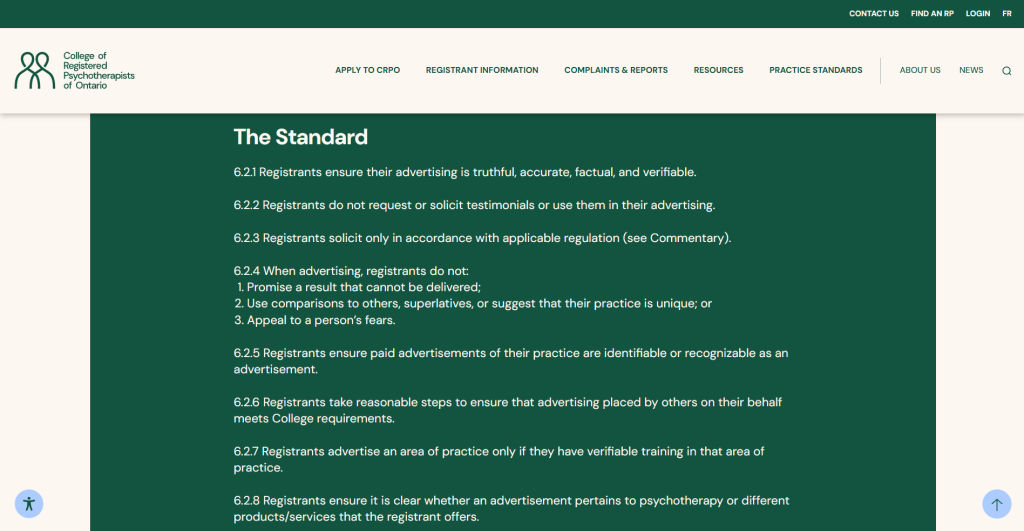
While each regulatory body has its own guidelines, most share common principles when it comes to advertising:
- Advertising must be truthful and verifiable
- No guarantees of outcomes or cures
- No misleading claims about expertise or results
- Clear representation of credentials and scope of practice
- No fear-based or exploitative messaging
Advertising mental health services is allowed, but exaggeration, false promises, or emotional manipulation is not.
Advertising Highly Restricted and Specialized Services
A great example of one area where this becomes especially clear is when advertising highly specialized mental health services such as ketamine therapy. Many clinics offering ketamine-assisted treatment initially believe they are completely prohibited from advertising because platforms like Google or Meta will automatically reject ads if the word “ketamine” appears anywhere on their website or landing pages. In reality, this isn’t a blanket ban on the service itself, but rather a restriction on how the service is framed and communicated.
In our experience running compliant marketing campaigns for ketamine clinics, the key has been adjusting language and positioning rather than abandoning advertising altogether.

By shifting messaging toward broader terms like psychedelic-assisted therapy and focusing ads on outcomes, patient suitability, and educational context, while reserving treatment specifics for consultations and intake flows, clinics can still advertise effectively without violating platform policies. This distinction between what is being advertised and how it is described is critical, and it’s often what separates stalled campaigns from scalable ones.
Platform-Specific Policies
Even if an advertisement complies with professional guidelines, it must also meet platform rules.
Google Ads allows mental health advertising but applies stricter review processes. Ads must:
- Avoid sensational language
- Avoid diagnosing users
- Focus on services offered rather than outcomes promised
Social media advertising (Facebook, Instagram) often limits targeting and messaging related to personal attributes or mental health conditions. Educational, informational messaging tends to perform best and is more consistently approved.
Understanding these restrictions is essential to running sustainable mental health advertising campaigns in Canada.
Common Myths About Mental Health Advertising
Myth 1: Mental Health Services Cannot Be Advertised
This is false. Mental health services can be advertised in Canada as long as guidelines are followed.
Myth 2: Advertising These Services Is Unethical
Advertising becomes unethical only when it exploits fear, promises outcomes, or misleads patients. Ethical, educational advertising is widely accepted and increasingly necessary.
Myth 3: Only Large Clinics Can Advertise
Many solo practitioners and private practices successfully advertise mental health services using compliant, well-structured campaigns.
Myth 4: Online Advertising for Mental Health Services Is Too Risky
When done properly, online advertising is one of the most controlled and measurable ways to promote mental health services responsibly.
How to Advertise a Mental Health Private Practice in Canada
Many searches revolve around how to advertise a mental health private practice, and the answer lies in clarity and restraint.
Running effective advertisements for mental health services focuses on:
- Education over persuasion
- Clarity over hype
- Support over urgency
Private practices perform best when advertisements explain:
- Who the service is for
- What issues the practitioner helps with
- What a patient can expect from the process
Avoid messaging that pressures users or frames services as urgent fixes for emotional pain. Ethical advertising builds trust before the first appointment.
Best Platforms for Mental Health Advertising in Canada
Google Ads for Mental Health
Google Ads remains one of the most effective platforms for promoting mental health services because it captures high-intent searches, such as people actively looking for help.
Successful campaigns often focus on:
- Service-based keywords
- Location-based queries
- Clear, informative ad copy
Social Media Advertising
Social platforms work best for:
- Educational content
- Awareness-based messaging
- Promoting resources or informational pages
Direct-response ads are more heavily restricted, but content-driven advertising can still support growth. Consider consulting an expert to help you navigate platform-specific regulations.
Website-Based Advertising and Educational Pages
Many clinics use educational landing pages as advertising destinations. These pages:
- Explain services in depth
- Set expectations
- Reduce anxiety before booking
This approach aligns well with ethical and regulatory expectations.
Mental Health Advertising Examples That Work
Effective mental health advertisements in Canada tend to share common characteristics:
- Educational tone rather than promotional language
- Focus on symptoms and experiences, not diagnoses
- Clear explanation of services offered
- Emphasis on professional credentials and approach
For example, ads that explain how therapy works or what to expect from counselling typically perform better and face fewer compliance issues than aggressive promotional messaging.
Our Experience Advertising Private Mental Health Services in Canada
Another consistent pattern we’ve seen across advanced mental health services, such as neurofeedback marketing, TMS marketing, and other non-traditional therapies, is that education-driven advertising significantly outperforms direct-response approaches. These are services most patients don’t fully understand when they first encounter them, and attempting to push immediate bookings often creates hesitation rather than trust.
The most effective campaigns prioritize education first: explaining what the therapy is, who it’s designed for, and how it works at a high level, then reinforcing that understanding through follow-up educational content and retargeting. This approach respects the emotional state of individuals seeking mental health care, many of whom are already navigating uncertainty or distress.
When clinics focus on building familiarity and credibility before asking for commitment, advertising becomes less about persuasion and more about guidance, which ultimately leads to stronger engagement, higher-quality inquiries, and better long-term results.
Is Mental Health Advertising Worth It in Canada?
Absolutely. Clinics across Canada offer life changing services, and when you think of it from the perspective that advertising ethically and effectively will allow those who need you most to find you, things change. Your brain health advertising can be highly effective when:
- Messaging is compliant and ethical
- Expectations are clearly set
- Ads are paired with strong informational content
It tends to be less effective when clinics rely solely on ads without building trust or educational resources.
In Canada’s competitive mental health industry landscape, mental health advertising is most effective when it’s approached as part of a broader, patient-focused growth strategy rather than a standalone tactic. At MINA Medical Marketing, we’ve consistently seen in our work with mental health clinics and private practices across Canada that thoughtful, compliant advertising, combined with clear education and strong patient trust signals can dramatically improve both reach and results.
When campaigns are aligned with how people actually seek mental health support, clinics are able to connect with more individuals who need care while maintaining ethical, sustainable growth.
Frequently Asked Questions About Mental Health Advertising
Is Mental Health Advertising Legal in Canada?
Yes, running advertisements for your mental health services is legal in Canada. Licensed mental health professionals and clinics are permitted to advertise their services as long as all advertising follows provincial regulatory guidelines, consumer protection laws, and the policies of the advertising platforms being used. These rules are designed to ensure that advertisements are accurate, ethical, and not misleading or exploitative. Because mental health services are considered sensitive, advertisements are often reviewed more carefully, and clinics must be especially mindful of language, claims, and tone. When mental health advertising is approached thoughtfully and compliantly, it is a legitimate and widely used way for providers to reach individuals seeking care.
Can Therapists Run Google Ads in Canada?
Yes, therapists and mental health clinics in Canada can run Google Ads, provided that the ads meet Google’s healthcare and mental health policies. Google typically allows ads for therapy, counselling, psychology, and related services, but it restricts messaging that could be considered diagnostic, sensational, or overly personal. Successful Google Ads campaigns for mental health services tend to focus on service availability, practitioner credentials, and educational information rather than promises of outcomes. Ads are often subject to additional review, which makes compliance and careful wording especially important.
Are Facebook Ads Allowed for Mental Health Services?
Facebook and Instagram do allow advertising for mental health services, but with important limitations. These platforms restrict targeting based on personal attributes and may limit how mental health conditions are referenced in ad copy. As a result, educational and informational content generally performs better and faces fewer approval issues than direct-response advertising. Campaigns that focus on awareness, resources, and general service explanations, rather than targeting individuals based on mental health conditions, are more likely to be approved and effective over time.
What Can’t Be Said in Mental Health Advertisements?
Mental health advertisements must avoid language that is misleading, fear-based, or promises specific outcomes. Claims of guaranteed results, statements implying certainty of diagnosis or cure, or messaging that pressures individuals during emotional distress are typically not permitted. Advertisements should also avoid exaggerating expertise, misrepresenting credentials, or suggesting that a service is appropriate for everyone. Ethical advertising in this industry focuses on accuracy, transparency, and patient well-being rather than persuasion or urgency.
How Much Does It Cost to Advertise Mental Health Services in Canada?
The cost of mental health service promotion in Canada varies depending on the platform used, geographic competition, and the type of service being promoted. Google Ads costs can fluctuate based on keyword demand and location, while social media advertising budgets are often more flexible. Many clinics find success by starting with a modest advertising budget, testing compliant messaging, and gradually scaling based on performance. Long-term results are typically strongest when advertising is paired with educational content and a well-structured patient intake process.