Healthcare marketing in 2026 isn’t just “digital marketing, but newer.” This guide breaks down the 5 top healthcare digital marketing trends for 2026, and the practical actions that clinics in Canada can take to stay visible, build trust faster, and convert more patients without relying purely on ad spend. The way patients discover clinics is changing at the source. Search behavior is getting more conversational, trust signals are becoming more measurable, and the line between “marketing” and “clinic operations” is disappearing.
At MINA Medical Marketing, Canada’s top healthcare digital marketing agency, we work exclusively with Canadian clinics, doctors, and healthcare brands. What we’re seeing right now is a clear shift: clinics that adapt to these changes early are compounding results, while others are quietly falling behind. Patients are highly privacy-aware, competition is intense in major metros, and healthcare services often require more education and reassurance before someone ever books an appointment.
Healthcare Digital Marketing Trend #1 for 2026: AI Search, AEO, and “Symptom-Based” Discovery
If you want to understand the emerging healthcare digital marketing trends for 2026, start with one reality: people are no longer searching the way they used to.
Yes, patients still type “clinic near me” into Google. But more and more, they’re describing what they’re experiencing in plain language, especially inside AI tools. That behavior creates a major shift in how your clinic gets discovered.
For example, instead of searching:
- “hormone specialist near me”
- “TRT clinic Toronto”
patients looking for hormone therapy increasingly ask:
- “I have brain fog, mood swings, fatigue, and low libido, could this be hormonal?”
- “What kind of doctor helps with PMDD symptoms that are getting worse?”
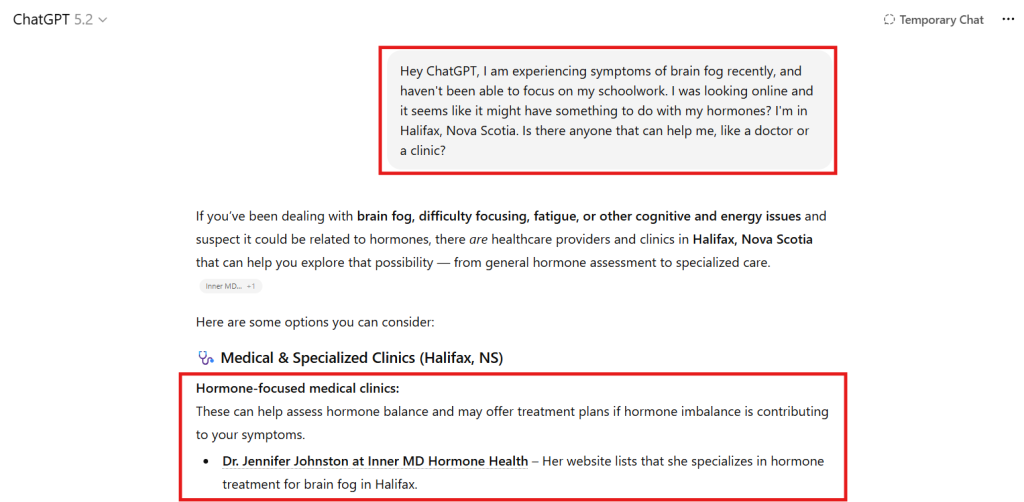
That’s not a small change. It’s a structural change in discovery.
Why Answer Engine Optimization (AEO) is a Major Medical Marketing Trend in 2026
Traditional healthcare SEO is often built around a small set of service keywords. AEO (Answer Engine Optimization) is about something different: being the best match for the question, not just the keyword.
AI-driven discovery favors clinics that:
- explain conditions in depth,
- connect symptoms to potential causes,
- show service relevance clearly,
- and publish structured, patient-friendly answers.
In other words: AI healthcare SEO rewards clinics that have content built around how patients actually speak.
Long-Tail “Condition Pages” Are No Longer Optional for Healthcare SEO in 2026
A lot of clinic owners dismiss condition-specific content because they look at search volume and think it’s not worth it. In 2026, that logic breaks.
The point isn’t just ranking for a single keyword like “hormone treatment for brain fog.” The point is that AI tools interpret patient stories and then look for the closest match online, which often means clinics that have already written about the exact symptoms and outcomes being discussed.
When a patient explains “brain fog + fatigue + mood swings” in an AI chat, the AI doesn’t just search for “hormone clinic.” It looks for clinics that explicitly connect hormone therapy to those symptoms, and that have content that demonstrates credibility around it.
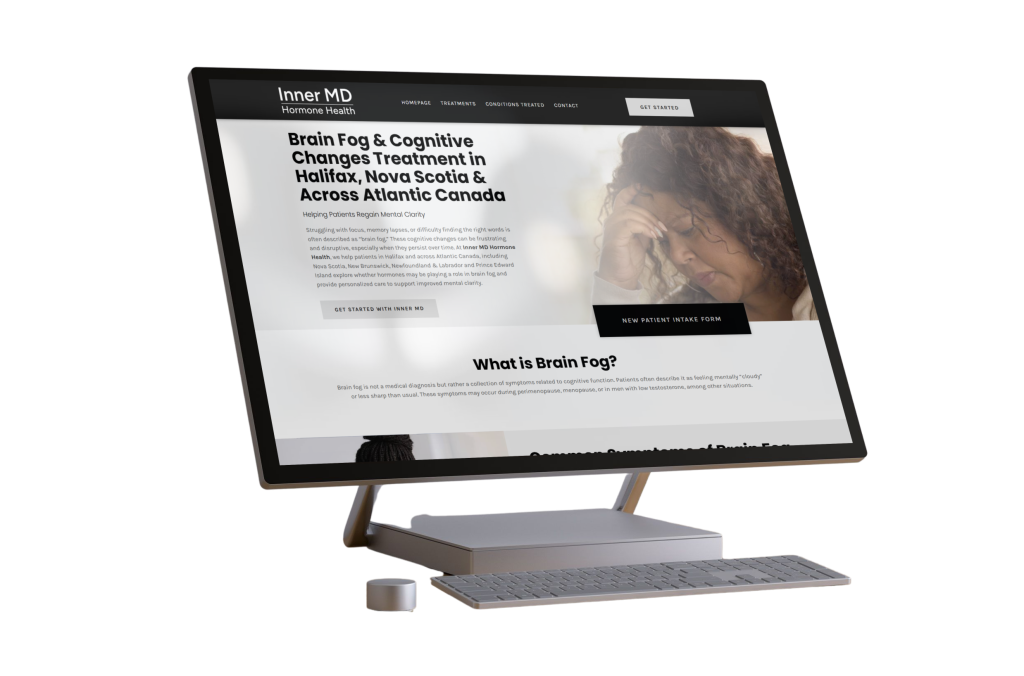
MINA Example: Hormone Therapy Condition Pages That Drove a 200% Traffic Increase
For Dr. Jennifer Johnston in the hormone health space, we built condition-based pages designed around how real patients describe their problems, including topics like:
- hormone therapy for low libido
- hormone therapy for fatigue and low energy
- hormone therapy for mood swings, anxiety, and depression
- hormone therapy for brain fog
- hormone therapy for PMDD
These weren’t built for vanity keyword volume. They were built because this is how patients search when they’re confused, worried, and looking for answers, especially inside AI experiences.
The result was a 200% increase in organic traffic (tracked through Google Search Console), alongside a major increase in AI-style discovery queries because the site now had broader, deeper relevance to symptom-led questions.
How Clinics Can Reverse-Engineer AI Results for Their City
Here’s a practical method we use that clinics can implement immediately:
Ask AI the same types of questions your patients ask, using local context. For example:
- “What could be causing brain fog and fatigue for women in their 40s in Toronto?”
- “Who treats PMDD symptoms in Vancouver?”
- “What kind of clinic helps with low libido and mood changes in Calgary?”
Then look at what AI tends to prioritize:
- which wording it repeats,
- which conditions it associates,
- and what it expects a “good” clinic page to contain.
From there, you create content that matches the question patterns and symptom language patients are actually using, even if the keyword tools show low volume.
In 2026, this is how clinics earn visibility in an AI-first world: not by chasing a handful of head terms, but by owning the entire symptom to solution conversation.
Healthcare Digital Marketing Trend #2 for 2026: Privacy-First Healthcare Marketing in Canada
This is one that’s becoming more important every year as patients become increasingly more aware of how companies use their data. Privacy is not a footnote in Canadian healthcare marketing, it’s a trust signal (and of course one that’s required by law).
One of the biggest healthcare digital marketing trends in 2026, especially in Canada is the move toward privacy-first strategy: tracking that respects patient expectations, avoids unnecessary risk, and produces cleaner decision-making.
This matters for two reasons:
- Patients are increasingly skeptical of aggressive retargeting and “creepy” ads, especially in sensitive healthcare categories.
- Marketing attribution is getting noisier across platforms, so clinics that rely on messy tracking end up making decisions on unreliable data.
- Advertising platforms like Meta and Google are tightening up privacy regulations around healthcare digital marketing.
What “Privacy-First” Actually Means for Canadian Clinics
Privacy-first marketing doesn’t mean you can’t measure performance. It means you build measurement around what matters:
- calls that turn into booked appointments,
- forms that represent real patients,
- actual scheduling events,
- qualified lead tracking (not just clicks).
Healthcare clinics in Canada that win in 2026 will focus less on vanity metrics (“traffic,” “impressions,” “CTR”) and more on patient acquisition metrics that reflect reality.
How This Impacts SEO, Ads, and Conversion Optimization
Privacy-first also pushes clinics toward content and organic authority because:
- organic visibility compounds,
- trust builds before the click,
- and the clinic isn’t dependent on constantly escalating ad costs.
For Canadian clinics, the strategic advantage is clear: privacy-first marketing becomes a credibility layer, not a restriction.
Healthcare Digital Marketing Trend #3 for 2026: Doctor-Led Short-Form Video as a Trust and SEO Asset
Short-form video isn’t new. What’s new in 2026 is how it’s used.
The best-performing clinics aren’t using video only for social media reach. They’re using video to reduce uncertainty, build familiarity, and strengthen the clinic’s SEO footprint.
Patients don’t just want information, they want reassurance that:
- the provider is competent,
- the process is safe,
- the outcome is realistic,
- and they won’t be judged.
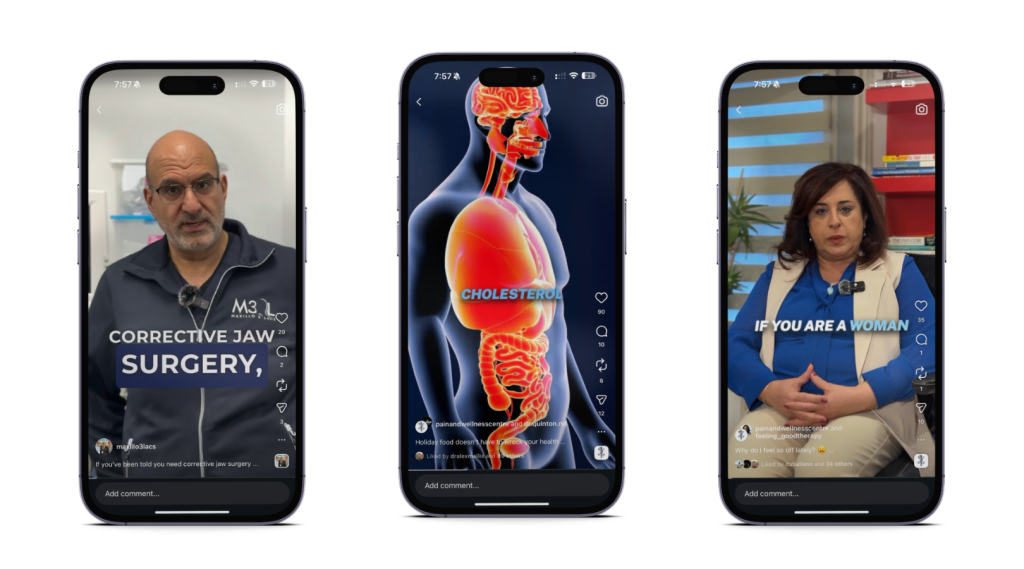
Doctor-led short-form video answers those concerns faster than almost anything else.
What Types of Healthcare Videos Perform Best in 2026
In Canadian healthcare social media marketing, the most effective videos are usually:
- “What to expect” explanations
- symptom education (“why you might feel X”)
- treatment breakdowns (who it’s for / who it’s not for)
- common fears and misconceptions
- cost/coverage context (when appropriate and compliant)
These don’t feel like ads. They feel like clarity. It can also help you build your own personal brand as a doctor.
The Key 2026 Shift: Turn Video Into Topical Authority
Here’s the miss: most clinics post videos and never connect them to their website content.
In 2026, the advantage goes to clinics that:
- embed videos into service pages and condition pages,
- support blog posts with video clips,
- add video to key FAQs,
- reuse video themes as SEO clusters.
That’s how video becomes more than “content.” It becomes authority.
Healthcare Digital Marketing Trend #4 for 2026: Conversion Systems (Booking, Missed Calls, Speed-to-Lead)
One of the most important medical marketing trends in 2026 is this: the clinic with the best conversion systems often beats the clinic with the biggest traffic.
Why? Because healthcare intent is fragile. People look when they’re worried, uncomfortable, or finally motivated. If the clinic can’t capture that intent immediately, it leaks.
What’s Actually Losing Clinics Money in 2026
The biggest silent revenue leak is not “low traffic.” It’s:
- missed calls,
- slow responses,
- confusing booking processes,
- and friction during intake.
Many clinics spend heavily on SEO or ads, then lose the patient at the exact moment they’re ready to book.
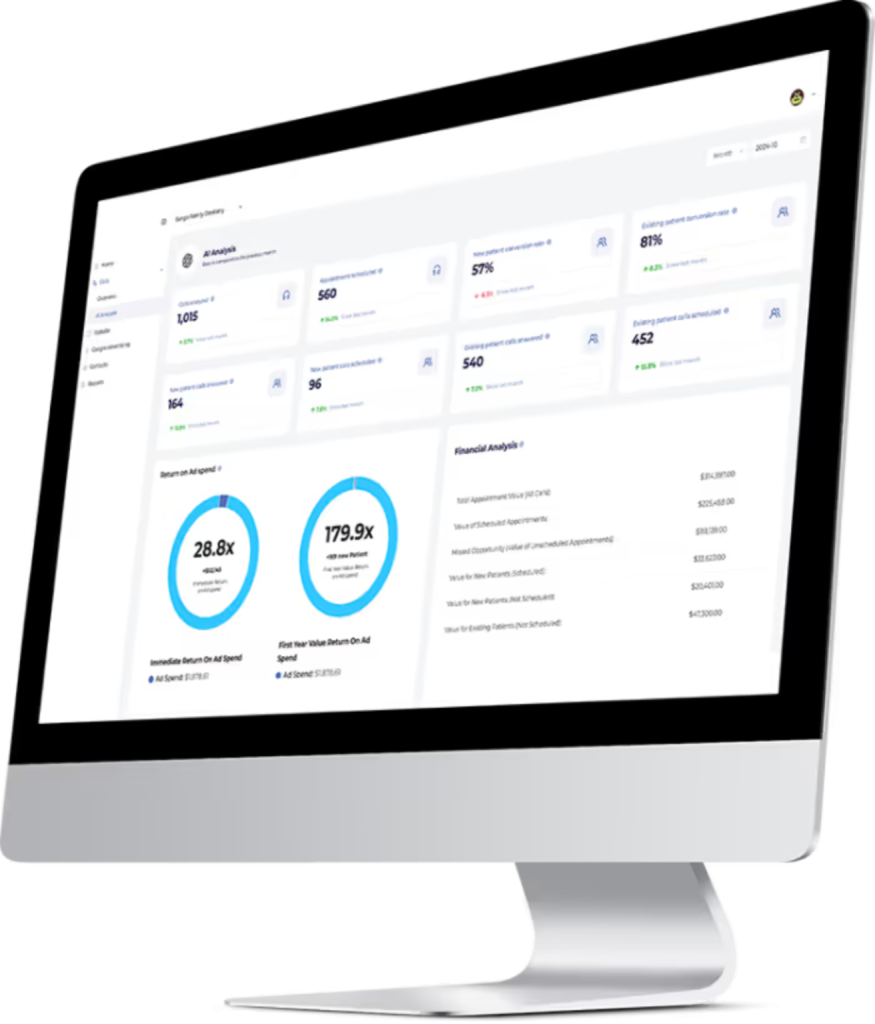
What Clinics Need in 2026 to Convert More Patients
A modern conversion system usually includes:
- clear online booking (or fast request flow),
- immediate follow-up for missed calls,
- low-friction forms,
- confirmation + reminder workflows,
- and clean handoffs to staff.
This is why marketing and operations are merging. In 2026, the “marketing result” isn’t a click, it’s a booked appointment.
Healthcare Digital Marketing Trend #5 for 2026: Local SEO + Reviews as the Primary Patient Decision Engine
In most Canadian cities, your Google Business Profile is the real homepage.
It’s where patients decide:
- if you’re legitimate,
- if you’re trusted,
- if you’re convenient,
- and if you’re “for them.”
This is why local SEO remains one of the most important healthcare marketing trends in 2026, even as AI grows.
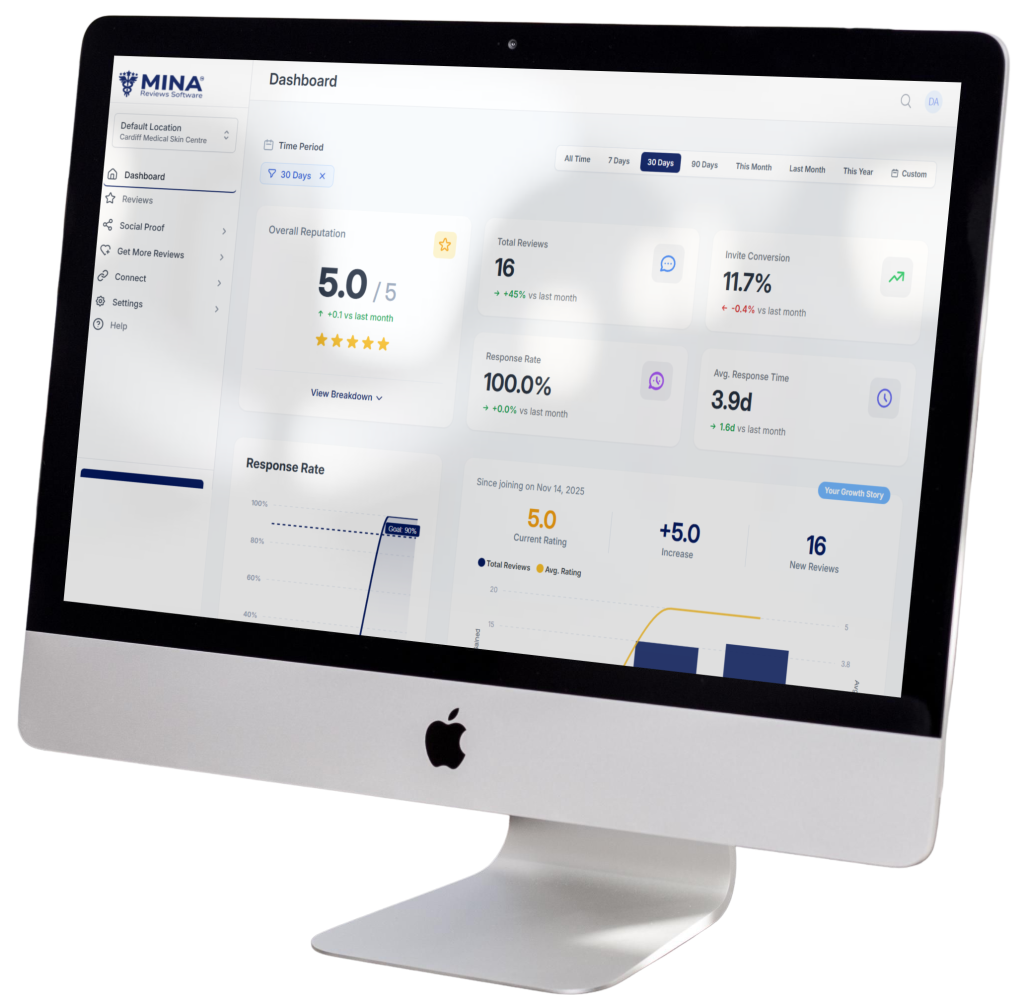
Why Reviews Matter More Than Ever in Canadian Healthcare Marketing
Reviews aren’t just reputation anymore. They influence:
- map rankings,
- click-through rates,
- conversion rates,
- and patient confidence.
In 2026, clinics that treat reviews as a one-time task fall behind clinics that run review generation as a system.
What a Modern Review System Looks Like
The clinics that win do three things consistently:
- Ask at the right time (post-appointment, when satisfaction is highest)
- Make it easy (one-click paths)
- Improve feedback loops (so issues are solved privately, and patients feel heard)
Local SEO isn’t “extra.” It’s the foundation of visibility for most healthcare services.
30-Day Plan for Canadian Clinics to Apply These 2026 Healthcare Marketing Trends
Week 1: AI + SEO Foundation
- Identify symptom-led questions patients ask
- Map which conditions you treat that you don’t have pages for yet
- Build a list of “symptom → solution” content opportunities
Week 2: Content Expansion
- Create or expand condition-focused pages
- Add structured FAQs to key pages
- Strengthen internal linking between conditions and treatments
Week 3: Local SEO + Trust
- Optimize Google Business Profile services, categories, and descriptions
- Improve photos and posting consistency
- Implement a review request system
Week 4: Conversion Systems
- Reduce booking friction
- Improve lead response speed
- Add missed-call capture and appointment-confirmation workflows
FAQ: Healthcare Digital Marketing Trends for 2026
Do clinics still need SEO in 2026?
Yes. But 2026 SEO is less about “one keyword per page” and more about topical authority, symptom relevance, and clarity for AI systems.
What is AEO in healthcare marketing?
One of the top emerging healthcare digital marketing trends as 2026 ramps up is AEO (Answer Engine Optimization), which is optimizing your content so AI tools can understand your clinic and recommend it when patients ask health-related questions conversationally.
Should clinics target low-volume condition keywords?
In 2026, condition-based content is often what gets you discovered inside AI experiences, because that’s how patients describe their concerns.
What matters more: paid ads or organic?
Both can work, but organic authority compounds. Clinics that rely only on ads often pay more over time, while clinics that build authority win more consistently.