
Patient Retention: 12 Strategies for Canadian Clinics
A clinic that adds forty patients a month and loses thirty five is running very hard to stand still. Retention is the number that decides whether you are actually growing.
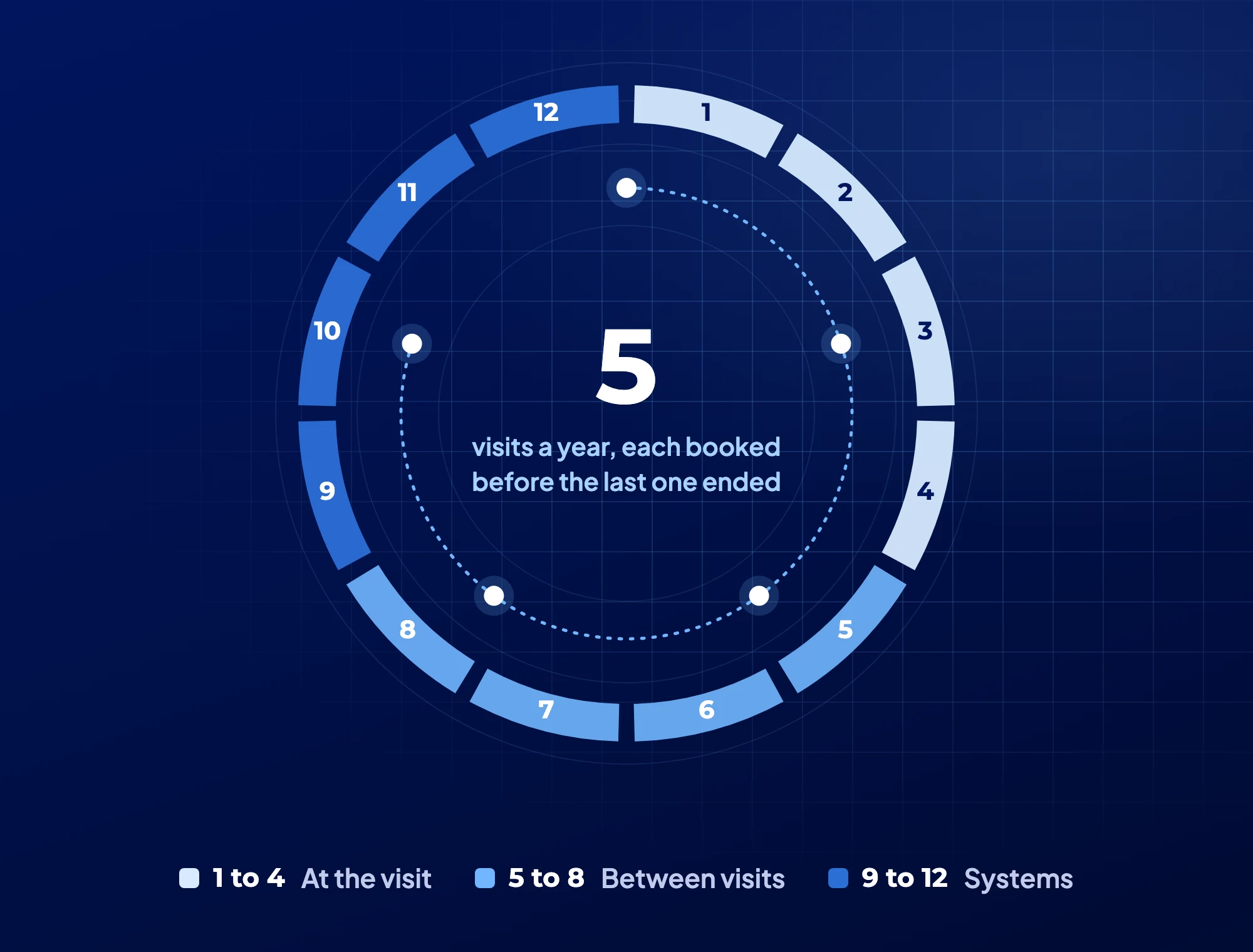
Most Canadian clinics measure growth by new patients. Patient retention, however, is the number that quietly decides whether the clinic is actually growing or simply replacing people who left.
A clinic that adds forty patients a month and loses thirty five is running very hard to stand still. Meanwhile, a clinic that loses only ten is compounding. As a Canadian healthcare marketing agency, we see the same retention gaps in clinics of every size. Below are 12 practical strategies, grouped into three areas, that improve patient retention without adding to your marketing budget.
Why Patient Retention Matters More Than New Patient Volume
Acquiring a patient costs money. Keeping one costs attention. Because you have already paid to acquire them, every additional visit from an existing patient carries far better economics than the first one did.
This matters more in Canada than most clinic owners realise. Many services here sit outside provincial coverage, so the patient is choosing to pay. Consequently, they are also choosing whether to come back, every single time.
Should Your Next Dollar Go to Retention or to New Patient Ads?
Our view is simple: fix the holes first. Most clinics earn their return on a patient over several visits, not on the first one. If you pour money into ads and then lose those patients after their first or second appointment, it becomes very hard to be profitable, however good the ads are.
So put the systems, the people and the processes in place to keep patients first. Then spend on acquisition. The order flips once rebooking, reminders and recall are running on their own and your return rate has held steady for a couple of quarters. At that point, every new patient you buy is one you are likely to keep, and that is when ad spend starts to compound.
Why Patients Really Drift Away
In the clinics we work with, the real reason is rarely the care. Patients drift because they feel the clinic’s role in their life ends the moment they walk out the door.
The fix is to keep that relationship going between visits. That means education about their condition and their treatment options, useful health tips, and follow up that feels warm and personal rather than automated, even when a system is sending it.
This is the single change we have seen make the biggest difference. For one clinic in Hamilton, the average number of appointments per patient per year rose 40% compared with the year before, once we put automated follow up, nurturing and patient education in place. The care did not change. The relationship between visits did, and a system now does that work every day without adding to the front desk.
Improve Patient Retention at the Appointment Itself
Retention is won or lost in the room, long before any marketing gets involved.
1. Book the Next Appointment Before They Leave
The easiest retention system is the simplest one. Book the follow up while the patient is still standing at the desk.
Patients who leave without a next date are the ones who disappear. Therefore, make booking forward the default rather than the exception.
2. Explain What Happens Next, in Plain Language
Patients rarely stop coming because of clinical quality. They stop because they were unsure what the plan was.
A short summary of what comes next, and why, does more for patient retention than any email campaign.
3. Be Honest About Cost Before the Appointment Ends
Unexpected cost is one of the most common reasons a Canadian patient does not return. Coverage varies by province, by plan and by service.
Say clearly what is covered and what is not. Patients forgive a fee they understood in advance. They rarely forgive a surprise.
4. Reduce the Wait Where You Can, and Explain It Where You Cannot
Waiting is tolerated when it is explained. It is resented when it is not.
If you are running behind, tell the patient how long and why. A waiting room that receives one honest update produces far fewer complaints than one left guessing.
Where the wait is structural rather than occasional, look at scheduling rather than communication. Overbooking to protect against no shows often creates the very delays that cause the next round of them.
Patient Retention Between Visits
The gap between appointments is where most clinics go silent. As a result, the patient forgets, and eventually they end up somewhere else.
5. Send Appointment Reminders That Actually Reduce No Shows
A reminder twenty four hours ahead reduces no shows substantially. Additionally, offering a simple way to reschedule turns a missed appointment into a moved one.
Text tends to outperform email for reminders, because it gets read. However, the same Canadian consent rules apply to commercial text messages, so keep reminders transactional rather than promotional.
6. Build a Recall List and Use It Every Month
Pull every patient you have not seen in twelve to eighteen months. Most of them have not switched clinics. They simply forgot.
Contact a portion of that list each month rather than all of it at once. That way the follow up is manageable and the front desk is not overwhelmed.
7. Use Email Within Canadian Consent Rules
Email is the cheapest retention channel available. In Canada, though, CASL is built on consent rather than an opt out. You need express consent, or implied consent from an existing relationship, such as a purchase within the last two years. That is stricter than the American rules most marketing advice assumes.
Check your consent position before you send anything. The Government of Canada’s anti spam guidance sets out the requirements directly.
8. Stay Visible Without Being Noisy
A clinic that posts useful information occasionally stays in mind. One that posts constantly gets muted. Our approach to healthcare social media marketing is built around usefulness rather than frequency.
Systems That Make Patient Retention Automatic
Anything that depends on someone remembering will eventually fail. Systems, on the other hand, keep working when the clinic gets busy.
9. Make Rebooking Possible Online at Any Hour
Patients often decide to rebook in the evening. If your only route is a phone line that opens at nine, you lose them.
Online rebooking captures that moment. It is one of the highest return changes in medical website design and it is frequently missing.
10. Track Your Retention Rate, Not Just New Patients
Measure how many patients seen last year returned this year. Until you track that number, you cannot tell whether anything you change is working.
Most practice management systems can produce this in a few clicks. Run it quarterly rather than annually, because a year is too long to wait before noticing a problem.
Segment it where you can. Retention often varies sharply between services, and the average hides which part of the clinic is leaking.
11. Ask Departing Patients Why
A short, genuine question to patients who have not returned tells you more than any survey. Frequently the answer is small and fixable.
Common answers include parking, phone hold times, and never being offered a follow up date. None of those are clinical, and all of them are cheap to solve once you know.
Unhappy patients sometimes answer publicly instead. Our guide to handling negative patient reviews covers that side.
12. Give the Front Desk Time to Do This Work
Retention tasks lose to whatever is urgent. Consequently, they need protected time on someone’s calendar, or they never happen.
The Patient Retention Messages We Set Up by Default
When we set up a clinic’s CRM, the same core sequence goes in every time. Each message is written in the clinic’s own voice, and each one has a clear job.
- Booking confirmation the moment an appointment is made, with the address, parking and what to bring.
- Reminders by text two days and one day before, each with a one tap link to confirm or reschedule.
- A next day check in after the visit, asking how they are feeling and repeating the aftercare in plain language.
- A treatment plan follow up for anyone who left without booking the next step, about a week later and again a few weeks after that.
- Education between visits, short and occasional, about their condition and the options open to them.
- Recall timed to the service, not to a generic yearly date.
- Reactivation for anyone not seen in twelve months or more.
- A review request after a good visit, asked plainly and never in exchange for anything.
Before we arrive, most clinics have one generic reminder from their booking software and nothing else. The patients most at risk, those who left without booking, hear nothing at all. A recall list usually exists, but nobody owns it, so it never gets sent. Where messages do go out, they often read like a machine wrote them. Finally, consent was never recorded properly. Once implied consent from a past visit expires, the clinic cannot legally email the very patients it most wants to bring back.
The Patient Retention Mistakes Canadian Clinics Repeat
Three errors show up again and again, and each one is easy to correct.
The first is treating retention as a marketing job. It is mostly an operations job, and marketing can only amplify what the clinic already does well.
The second is discounting to win patients back. A discount attracts the patients least likely to stay, and it teaches loyal ones to wait for the next offer.
The third is measuring satisfaction instead of return visits. Patients frequently report being satisfied and still never come back, so the only reliable measure is whether they booked again.
Start Measuring Patient Retention at Your Clinic
Begin with one number: the share of last year’s patients who came back. Then pick the three strategies above that your clinic does worst and fix those first.
If you would rather have someone look at where your clinic is losing patients between visits, our healthcare marketing services start with that audit. You can also read our guide on patient acquisition strategies for Canadian clinics for the other half of the equation.
Want this working for your clinic? We build the search visibility, the website and the patient booking path for Canadian practices, and tell you plainly what to fix first.
Book a free consultation